
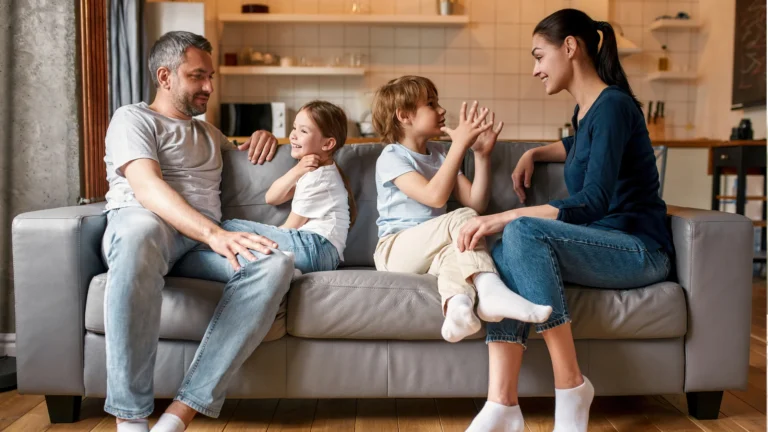
Supporting Siblings When One Child Has Higher Emotional Needs
When one child in a family is navigating significant emotional, behavioural, or mental health challenges, the entire family system feels it. Parents often pour enormous energy into understanding their child’s needs, coordinating appointments, managing difficult moments, and learning new strategies. It’s an act of love — and it’s also exhausting work that inevitably shapes the rhythm of daily family life
But there’s another set of children quietly watching all of this unfold: the siblings.
Whether they’re older or younger, siblings of children with higher emotional needs occupy a unique and complex position in the family. They may not understand what’s happening with their brother or sister. They may feel scared, confused, resentful, or fiercely protective — sometimes all at once. They often receive less parental attention during the hardest stretches, not because they are loved less, but simply because one child’s needs are demanding so much more right now.
The research is clear: siblings of children with emotional and behavioural challenges are themselves at elevated risk for anxiety, depression, and social difficulties if they don’t receive adequate support. At the same time, research also shows that siblings who are well-supported can develop remarkable strengths — empathy, resilience, maturity, and a deep capacity for compassion.
This post is for the parents who are already doing so much, and who want to make sure they’re not leaving their other children behind in the process.
Education Tip: Siblings who understand, at an age-appropriate level, what’s happening in their family feel less anxious and more capable of coping than those left to make sense of it on their own.
Understanding the Sibling Experience
Before we talk about what to do, it helps to understand what siblings of children with higher emotional needs are experiencing. Their inner world is often more complicated than it appears on the surface.
The Invisible Middle
Siblings in these families sometimes describe feeling invisible — not neglected exactly, but consistently shifted to second place during moments of family crisis. A child who would normally get help with homework finds Mom on the phone with a therapist. A child looking forward to a birthday outing learns the plan has changed because the week has been too hard for their sibling. These moments are individually understandable, but they accumulate. Over time, the sibling may stop asking, stop expecting, and quietly begin to feel that their needs simply matter less.
Some siblings respond by becoming extraordinarily self-sufficient — handling their own problems, never complaining, presenting as the “easy” child. While this looks like maturity, it can mask real struggles. Children who suppress their own needs for the sake of family harmony often carry significant internal burden.
The Weight of Complicated Feelings
Siblings frequently experience emotions they feel they’re not allowed to have. Resentment, anger, jealousy, and frustration are common — and deeply uncomfortable for children who love their brother or sister and can see that they are struggling. A child might think: How can I be angry at someone who is sick? What kind of person feels jealous of their sibling’s therapy appointment?
These feelings don’t go away when children push them down. They tend to emerge in other ways — increased irritability, somatic complaints like stomach aches, regression in younger children, or behavioural problems at school. When children learn that all of their feelings are normal and have a safe place to land, the pressure often releases dramatically.
Fear and Confusion
Younger children especially may not understand what is happening with their sibling. They may fear that the emotional dysregulation they witness is contagious, or that their sibling could be permanently “taken away.” They may develop their own anxiety in response to the unpredictability in the home environment. Even older children and teenagers may have significant gaps in their understanding that, when filled with age-appropriate information, provide enormous relief.
The Protective Role
Many siblings, especially older ones, step into a protective or caregiving role. They monitor their sibling’s moods, try to prevent triggers, or de-escalate conflict to keep the peace. While some of this is natural sibling behaviour, when it becomes a consistent pattern — when a child is regularly managing an adult-level responsibility — it can interfere with their own development, friendships, and sense of childhood. This is sometimes called “parentification,” and it deserves direct attention.
What Siblings Actually Need
Understanding the sibling experience points directly to what these children need most. None of it is complicated, but all of it requires intentional effort in the context of an already stretched family system.
To Be Seen and Named
Every child in the family needs to feel that they matter — not in comparison to anyone else, but on their own terms. For siblings of children with higher needs, this often means explicitly carving out time and attention that is theirs alone.
This doesn’t need to be elaborate. A ten-minute check-in at bedtime. A standing Saturday morning errand together where the conversation is entirely about them. A note in their lunchbox. The specific activity matters far less than the consistency and the clear message: You are not forgotten. You are not second. You are seen.
When parents name the sibling’s experience directly — “I’ve noticed things have been really hard at home lately, and I want to know how you’re doing with all of it” — it gives children permission to have feelings they may have been quietly storing. Many siblings report that no one ever simply asked them how they were coping.
Age-Appropriate Understanding
Children fill information gaps with imagination, and imagination tends toward the worst-case scenario. Providing age-appropriate explanations about a sibling’s challenges reduces fear, increases empathy, and helps the sibling make sense of what they observe.
For young children (ages 4-7), simple, concrete language works best. “Your sister’s brain has a really hard time calming down when she gets upset. We’re helping her learn how, just like we help you learn things that are hard.” Avoid clinical labels with very young children unless they’re already part of family vocabulary.
School-age children (ages 8-12) can handle more nuance. They often appreciate understanding that the brain works differently in people with anxiety, ADHD, mood disorders, or trauma histories, and that therapy and support are how people learn to manage that. They may have questions that deserve honest, thoughtful answers.
Teenagers can often handle and benefit from significantly more information. Adolescents are developing their own identities and their own understanding of mental health. Conversations that treat them as capable and intelligent — while maintaining appropriate boundaries about their sibling’s private details — tend to be most effective.
Permission to Have All of Their Feelings
One of the most healing things a parent can say to a sibling is: “It makes sense that you feel angry sometimes. It makes sense that you feel sad. It makes sense that you feel frustrated. You’re allowed to feel all of that, and it doesn’t mean you don’t love your brother/sister.”
Children need to hear, explicitly and repeatedly, that complicated feelings are not the same as bad character. The sibling who feels jealous of their brother’s therapy appointment is not a bad person — they are a child whose needs have been stretched thin, longing for more. The sibling who felt relieved when her sister went to stay with grandparents is not heartless — she is exhausted and craving peace.
Normalizing these feelings, ideally before children have to confess them with shame, removes significant emotional burden.
Their Own Space and Identity
It is easy for a sibling’s identity to become defined by their relationship to their brother or sister. At school they may be known as “the sibling of so-and-so.” At home, conversations and energy often centre on the child with higher needs. Siblings need active support in maintaining and developing their own identity — their interests, friendships, achievements, and sense of self as a whole person, not just a supporting character in someone else’s story.
This means celebrating the sibling’s accomplishments with full presence and energy, supporting their participation in activities that are just for them, and being intentional about not making every family conversation about the child who is struggling.
Clear and Consistent Boundaries
In families where one child’s behaviour can be intense or disruptive, siblings often don’t feel safe raising legitimate grievances because of the potential for escalation. Over time, they may simply stop asserting their own needs.
Children need to know that their safety and wellbeing matter, that they are allowed to have physical and emotional space, and that parents will hold appropriate limits even in difficult moments. This doesn’t mean responding harshly to the child with higher needs — it means ensuring that the sibling receives consistent, clear messages that their rights within the family are not forfeit because their sibling is struggling.
How Parents Can Build Support Into Daily Life
Supporting siblings well doesn’t require a completely restructured life — it requires thoughtful, consistent habits that signal care and attention.
The One-on-One Ritual
Identify a recurring, protected time that belongs to each sibling. It might be brief, but it should be regular and — as much as humanly possible — not cancelled because of the other child’s needs. When it does get disrupted, acknowledge it directly and reschedule promptly. The ritual communicates: You are a priority. Not sometimes. Always.
The Family Meeting
Structured, age-appropriate family meetings give everyone a voice. They provide a forum for siblings to raise concerns, ask questions, and feel like legitimate members of the family team rather than bystanders to decisions being made around them. Even young children feel more settled when they have a regular, predictable opportunity to speak and be heard.
Keep family meetings solution-oriented and warm — this is not a forum for grievances to pile up, but for everyone to feel connected to the family as a unit.
Honest, Ongoing Conversation
Rather than a single “talk” about what’s happening with their sibling, think of sibling support as an ongoing conversation that evolves as children grow and as the family situation changes. Revisit the topic regularly. Ask how they’re doing with it. Notice when they seem to be carrying something and name it gently. Invite, don’t interrogate.
Model healthy emotional processing by sharing your own feelings appropriately: “I feel tired sometimes, and I also feel really hopeful about the progress your sister is making.” This teaches children that it’s possible to hold complexity — to love someone and find them hard, to feel overwhelmed and also committed.
Connecting Siblings to Their Own Support
Sometimes the most powerful thing a parent can do for a sibling is recognize when that child needs their own therapeutic support — not because something is wrong with them, but because they are navigating something genuinely hard and deserve a space that is entirely theirs.
Individual counselling can give siblings a place to process their feelings without worrying about burdening their parents or upsetting the family balance. Group therapy — particularly groups for siblings of children with mental health or developmental challenges — can be especially powerful. The discovery that other children are in similar situations and feel similar things is profoundly normalizing.
Some communities and organizations also offer sibling-specific programs, family therapy that explicitly includes siblings, and psychoeducational workshops designed for children in this role. Exploring what’s available in your area is a worthwhile investment.
When to Seek Professional Support for a Sibling
Many siblings do well with the kinds of everyday support described above. Others benefit from professional support at specific points in the journey. Consider reaching out if a sibling:
Seems persistently sad, anxious, or withdrawn
Has significant changes in sleep, appetite, or academic performance
Expresses thoughts of self-harm or hopelessness
Becomes increasingly aggressive or defiant
Shows signs of excessive worry about the home environment
Consistently takes on a caretaking role beyond what is developmentally appropriate
Reports feeling like they don’t matter or that the family would be better off without their needs
These signs are not cause for alarm, but they are signals worth taking seriously. Siblings who receive support early, before distress becomes entrenched, almost always do better than those who wait.
It is also worth noting that siblings sometimes develop their own mental health challenges that are entirely separate from their sibling’s — anxiety, depression, ADHD, and learning differences do not require family trauma to emerge. A sibling who is struggling may need support for reasons completely their own, and the presence of a higher-needs sibling should not create a blind spot that delays that support.
The Bigger Picture: Raising Resilient Families
It would be a disservice to speak only about risk without acknowledging what is also true: siblings of children with higher emotional needs often develop remarkable qualities. Research and clinical experience consistently point to elevated levels of empathy, emotional intelligence, tolerance for difference, advocacy skills, and resilience in these children when they are well-supported.
These are not small gifts. They are qualities that shape careers, relationships, and character in enduring ways. Children who grow up navigating complexity with support — who are given language for difficult feelings, who learn to hold space for others while also advocating for themselves, who understand that struggle is part of the human experience — are often extraordinarily capable adults.
The goal is not to shield siblings from the reality of their family, nor to minimize it. The goal is to walk alongside them through it, ensuring they have what they need to grow through the experience rather than simply survive it.
Your family is doing something hard. All of you — including the siblings who are quietly figuring out their place in the middle of it. They deserve to be seen, supported, and celebrated for that journey too.
If you’re wondering whether your family might benefit from sibling support, family therapy, or individual counselling for a child in the family, we welcome the conversation. Our team at Clear Health Solutions works with children, youth, and families across Saskatchewan to provide support that is tailored, evidence-based, and built around the whole family — not just one member of it. Every child in your family deserves to thrive.
Corporate HQ / Counselling & Therapy
3120 Faithfull Ave, Saskatoon, SK 306 934 4345
Saskatoon Office
2345 Avenue C North
Saskatoon, SK 306 934 4345
Regina Office
425 Winnipeg Street Regina, SK 306 934 4345
Moose Jaw Office
Opening Soon — Moose Jaw, SK 306 934 4345